Leave Your Message
654ee37r6f

Custom CNC Turning Services And Parts - OEM China CNC Turned Components Manufacturer And Company

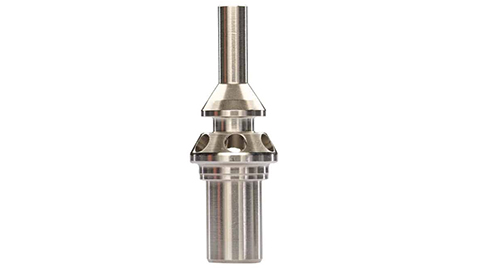
Junying is an experienced precision CNC turning services supplier, manufacturer, exporter in China, has been specialized in offering best OEM CNC lathe services for superior quality low cost CNC lathing/turning parts or high precision machined components with the operation of an impressive range of state-of-the-art turning machines, such as washers, bolts, shafts, rivets, spacers, sleeves, nipples, stainless steel fittings, pipe fittings, light fittings, wheel studs, etc.

Our advanced CNC turning center routinely works with a wide variety of materials, ranging from copper, brass, stainless steel, carbon steel, aluminum, and titanium. We can always choose a suitable precision turning process to reach your requirements. Our custom CNC machining services ensure that our customers receive the highest quality CNC turned parts. Send your inquiry or drawing fast to get an online CNC quote.

CNC Turning Tolerance At Junying

We have multiple CNC manufacturing capabilities and can meet a wide variety of needs.

1. Size

Linear dimension
+/- 0.025mm
+/- 0.001 inches
Hole diameter (not reamed)
+/- 0.025mm
+/- 0.001 inches
Shaft diameter
+/- 0.025mm
+/- 0.001 inches
Part Dimension limit
950*550*480mm
37.0 * 21.5 * 18.5 inches

2. CNC Machining Standards

CNC Machining Standards (DIN ISO 2768-1(1991-06)
Tolerance class tolerance(mm)
Metal (ISO 2768-F) Plastic (ISO 2768-F)
0.5 to 3 Over 3 to 6 Over 6 to 30 Over 30 to 120 Over 120 to 400 Over 400 to 1000 Over 1000 to 2000 0.5 to 3 Over 3 to 6 Over 6 to 30 Over 30 to 120 Over 120 to 400 Over 400 to 1000 Over 1000 to 2000
F ±0.05 ±0.05 ±0.1 ±0.15 ±0.2 ±0.3 ±0.5 ±0.05 ±0.05 ±0.1 ±0.15 ±0.2 ±0.3 ±0.5

2.1 General Tolerances For Shape And Position

General tolerances for shape and position (DIN ISO 2768-2(1991-04)
Tolerance class tolerance(mm)
Straightness and Flatness Verticality Symmetry
10 10 to 30 30 to 100 100 to 300 300 to 1000 1000 to 3000 to 100 100 to 300 300 to 1000 1000 to 3000 to 100 100 to 300 300 to 1000 1000 to 3000
H ±0.02 ±0.05 ±0.1 ±0.2 ±0.3 ±0.4 ±0.2 ±0.3 ±0.4 ±0.5 ±0.5


CNC Turning Materials At Junying - Materials Used For CNC Turning Services

CNC turning service can be applied to a wide variety of materials, including metal, plastic, and wood. Different lathes are needed for turning metal and wood. According to the types of machined part materials, certain maintenance and safety precautions may be required for the lathe. Here are some common materials for CNC turning manufacturers below. If the material you required is not listed in the table, please contact us.

Material Available Types & Grades
Aluminum

Aluminum 2024

Aluminum 5052

Aluminum 5083

Aluminum 6063

Aluminum 6061

Aluminum 6082

Aluminum 7050

Aluminum 7075

Brass/Bronze

Brass C360

Brass 260

C932 M07 Bearing Bronze

Copper

Copper C110

Copper 101

Steel

Alloy Steel 4130

Alloy Steel 4140

Mild Steel 1018

Mild Steel A36

Stainless Steel

Stainless Steel 17-4

Stainless Steel 18-8

Stainless Steel 303

Stainless Steel 304/304L

Stainless Steel 316/316L

Stainless Steel 416

Stainless Steel 420

Titanium

Titanium Grade 2

Titanium Grade 5

Plastics

ABS

Nylon

POM

PEEK

PMMA

PTFE

Polystyrene

Polyethylene

Polycarbonate


CNC Turning Surface Finishes At Junying - Surface Finishing Process For Turned Parts

Here is a wide selection of metal surface finishing services at your choice for the machined CNC turning parts to improve the part appearance, surface smoothness, corrosion resistance, and other characteristics.

As machined Description
As machined Standard finish with a surface roughness of 1.6 μm (126 μin).
Smoothing The standard smoothing surface roughness (Ra) is 0.8 μm (63 μin).
Painting Spraying paint, pigment, or color to a solid surface as a colored protective layer.
Passivation Remove ferrous contaminants or use a light coat of protective material to create a shell.
Powder Coating A functional and decorative finish that is applied as a free-flowing, dry powder.
Anodizing Type II (anodizing color or clear) or Type III (anodizing hard coat)
Polishing Produce a smooth and shiny surface.
Black Oxide Forming a black conversion coating on metal parts.
Bead Blasting Removing surface deposits by applying fine glass beads at a high pressure.
Abrasive Blasting/Sandblasting Smoothing and cleaning a hard surface by forcing solid particles across that surface.
Electroplating/Plating Form a thin coherent metal coating on an electrode.
Brushing Polishing the metal with grit resulting in a unidirectional satin finish.
Chromate Conversion Coating Increase the corrosion resistance while maintaining conductive properties.


654f455o8e

If you need unconventional materials and custom surface treatment, please contact us.

subscribe

CNC Turning FAQs

1. Is My Part a Good Fit for CNC Turning?

+
The following parts are a good fit for lathe machining:

Rotary parts with high precision requirements.

Rotary parts with complex surface shapes.

Rotary parts with lateral machining.

Ultra-precision and ultra-low surface roughness parts.

Parts with special threads.

2. How to Reduce the Cost of Machining Parts?

+

The main costs related to CNC machining can be divided into machining time, start-up cost, material cost, and feature cost. To reduce costs, you need to understand the impact of these factors on costs.


- The best way to reduce machining time is to design features that can be processed quickly, such as by selecting the correct inner corner radius, reducing the cavity depth, increasing the wall thickness, limiting the thread length, and designing holes of standard size.


- The material cost can be reduced by considering the size of the required blank and the cost and machinability of bulk materials (softer alloys process faster).


- Start-up costs can be reduced by reducing the number of part rotations or repositioning required to complete the part, such as dividing the geometry into multiple parts that can be assembled later.


- Using tolerances only when strictly necessary, deleting all text and letters, and avoiding multiple surface treatments can reduce feature costs.


Read more detail in our complete guide on how to reduce the cost of CNC machining parts.

3. What Parts Can Be Made with CNC Turning?

+
CNC turning is used for creating a variety of parts, including auto parts, knobs, tubes, gears, toy parts, flywheels, crankshafts, hubs & disc cams. It is most often used to manufacture CNC parts online for automotive, aerospace, medical, and other industries.

4. What is CNC Turning Center - Difference Between CNC Lathes and CNC Turning Centers

+
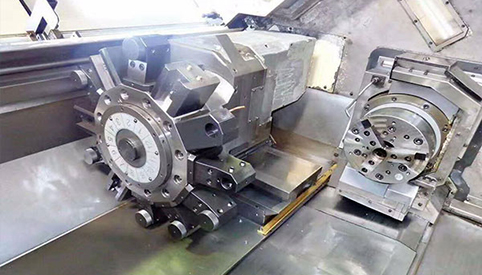
CNC turning center, the equipment or machines for CNC turning service, is a computer-controlled 3, 4, or 5-axis machine that has capabilities of turning, drilling, tapping, and milling, using live tools with powered rotary tool turret, dual spindles, Y-axis, and multiple turrets. While CNC lathe machine is simpler 2-axis with one spindle, basically composed of headstock, carriage, tailstock, and bed.

- CNC turning centers have more complex structures than CNC lathes.

- CNC turning centers have higher production capabilities and versatility than CNC lathes.

- CNC lathes are generally flat-bed type while turning center usually slant-bed type.

- There are only minimal protective enclosures around the lathe while the turning center is commonly equipped with full enclosures to keep chips and coolant splashes within the machine.

5. Heat Treatment of Precision Turned parts

+
Heat treatments can be applied on precision CNC turned parts to improve their key properties such as hardness. Heat treatment can be applied to metal parts throughout the manufacturing process.

- Hardening: used to harden the material and make it stronger, also decreases the ductility.

- Annealing: heats metal parts to a very high temperature and then slowly cools to achieve the desired microstructure.

- Normalizing: used to relieve internal stresses that were created during machining service.

- Quenching: heating the metal to a very high temperature, followed by a rapid cooling step.

6. What is the Difference Between CNC Turning and Milling?

+
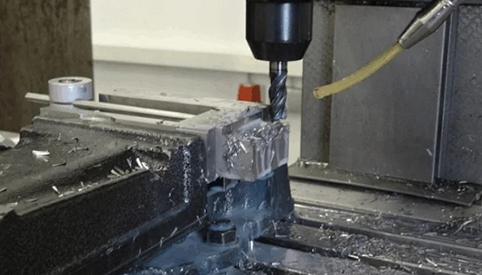
The most significant difference is that CNC turning rotates the part for cutting, CNC milling rotates the tool to cut the part. Going further, CNC turning will typically be used for cylindrical parts, as you rely on the part itself to rotate and create friction to remove material when the cutting tool is placed against it. On the other hand, CNC milling can create more complex parts as it is the cutting tool (rather than the material) that is spinning. 654f4bbro8
654f4c4zij

Let's discuss your project. For DMF review, please click here.

subscribe

Applications Of CNC Turning Services And Parts

Junying is a CNC turning company offering services suitable for mass production of high precision small CNC turning parts, such as components for cell phone, medical devices, optical equipment, automobile, lighting industry, office equipment, etc. We can know that CNC turning has become the most basic, extensive and important technology in the mechanical manufacturing industry, which directly affects production efficiency, cost, energy consumption, and environmental protection. The CNC turning applications involves the following industries (not limited to):

654f4d6ay5

Enjoy our fast & free delivery

654f4eful3

medical industry

654f4f2708

Automotive industry

654f4f4m1q

Marine industry

654f4f7f2r

Agricultural industry

654f4f93cj

Machine tool industry

654f4fbaw7

Military industry

654f4fdew2

High-tech industry

654f4ff8b2

Food industry

654f501prr

Aerospace industry

654f4d6ara

Semiconductor industry

If you’re looking for CNC turning parts that require precision machine like a turning center or a CNC machine shop near me, Junying can provide the best CNC lathe machining services for you.


Junying Will Ensure The Quality Of Machining Parts Through Multiple Solutions

We’ll conduct a quality inspection on each order, further reports and certification can be offered at your request. Please submit the order to start.

Standard
  • Critical dimensions
  • Quantity of parts
  • Removal of sharp edges and burrs
  • Number of parts inspected
  • Surface finish
Upon Request
  • Full dimensional inspection report
  • Material/mill test report
  • ISO9001, ISO14001, ISO27001 and IATF 16949 certifications
  • First article inspection for orders of 100+ units
  • Certificate of Conformance
  • Material Test Reports

Maximum CNC Turning Capabilities At Junying

Size Limit Metric Imperial
Maximum part diameter 431mm 17 inches
Maximum part length 990mm 39 inches
Maximum swing on carriage 350mm 13.7 inches
Maximum spindle through hole 40mm 1.5 inches

6529099578

What Is CNC Turning And How It Works - Basics Of CNC Turning Process

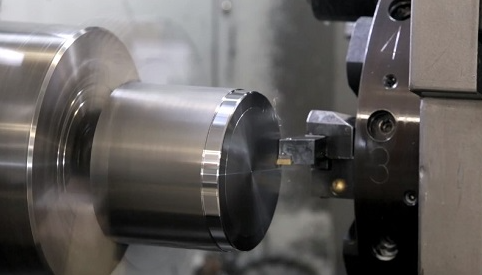
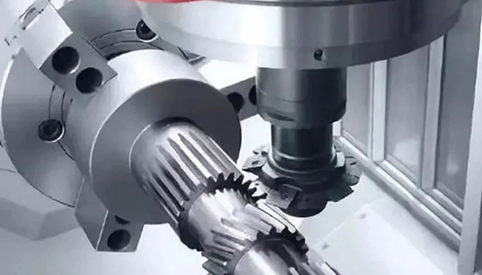
CNC turning is a particular form of the precision CNC machining process that holds a cylindrical workpiece in a chuck and rotated, while the cutting tool is fed to the piece and removing material to get the desired CNC turned components, leaving an excellent surface finish that sometimes requires no post-processing. Turning can be performed on the outside or inside of the workpiece to produce tubular components to diverse geometries.

When it comes to the CNC turning process, the subtractive manufacturing method is typically performed on CNC lathe or turning center. Before the cutting, G-code and turning machine need to be prepared, then secure the blank bar of stock material in the chuck of spindle, the chuck holds the piece in place when the spindle rotates. With the spindle spins to certain speed, a stationary single-point cutter will move on a linear path that parallel to the axis of rotation and remove excess material, reduce the diameter of the block, specify the dimension and create smooth finish, to get final custom CNC turned parts with desired specification.

6529099t2g

CNC Turning Operations - Types Of CNC Turning

Tapered turning: produce a cylindrical part of which diameter decrease from one end to another.
Hard turning: suited for materials with a Rockwell C hardness greater than 45, typically performed after heat treated.
Spherical generation: create a spherical finished surface, turning around fixed rotary axis.
Facing: a turning operation in which the workpiece is machined to its center.
Parting: create deep grooves that remove a completed or part-complete component from its parent stock.
Grooving: similar to parting, but only cut to a specific depth from outside or inside of workpiece.
Drilling: remove materials to drill holes from the inside of a workpiece with drill bits held stationary in the tail stock or tool turret of the lathe.Boring: enlarge or smooth an existing hole.
Knurling: cut serrated pattern onto the surface of workpiece with knurling tool, to change or enhance visual effect or hand grip.
Reaming: remove a small volume of materials from a drilled hole, for highly accurate diameters.
Threading: turn standard and non-standard screw threads, generally means single-point threading.
Polygonal turning: non-circular forms machining operation without interrupting the rotation of the raw material.

Junying will ensure the quality of the turned parts quote. Our CNC quotes can be generated instantly.

Our case & products:

Related news:

65518b17a8
How To Eliminate Chatter & Vibratio
We have all encountered the problem of workpiece surface chatter during CNC turning.
6551922mun
Machining Quality Problems Of CNC......
Controlling the processing quality of CNC turning parts is the key point to promote the
6551925u4a
The Future Development Direction of 5......
The 5 axis turning milling integrated processing technology is a typical multi axis processing
6551927ab6
What Are The Advantages of CNC Tu......
CNC turning and milling parts are a type of CNC machining parts. CNC turning and milling parts
6551929fux
Maintenance Of Turning Milling Co......
Due to its unique advantages, turn milling machining has formed a unique core
655192b6y8
How To Improve Chip Breakage In ......
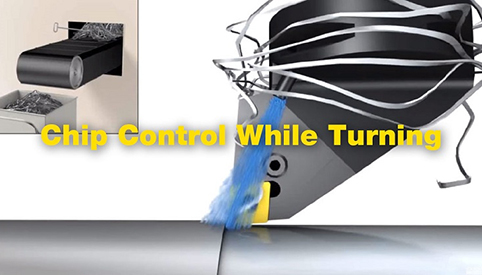
Chip control and chip jamming present major challenges in all turning operations. Poor chip